
How the pelvic floor can present as hip and lower back pain
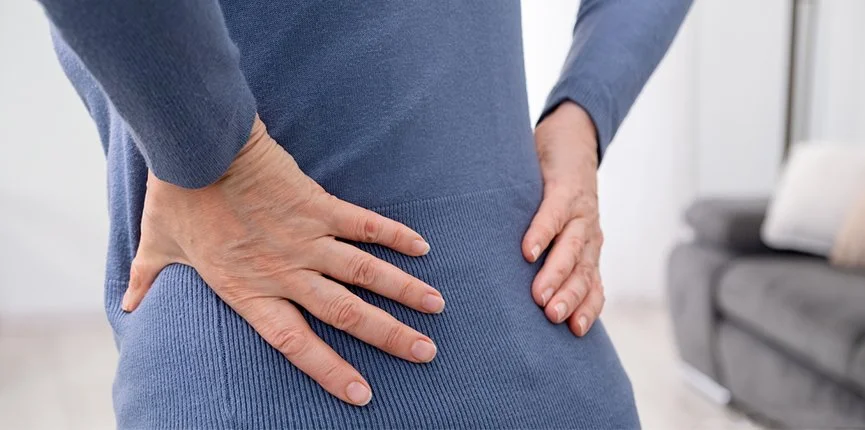
When people think about the pelvic floor, they often associate it only with bladder, bowel, or prolapse concerns. However, the pelvic floor plays a much broader role in movement, stability and pain. Pelvic floor dysfunction can present as hip pain, lower back pain, or both.
Understanding this connection is key to getting the right diagnosis and treatment, particularly when hip or back pain is persistent or not responding to traditional approaches.
When the pelvic floor can cause hip and lower back pain
The pelvic floor doesn’t work in isolation. It’s part of a deep stabilising system that includes the diaphragm, deep abdominal muscles, lower back muscles and the muscles around the hips. These muscles work together to manage pressure, transfer load and support movement.
When the pelvic floor is not functioning optimally (whether it’s too tight, too weak or poorly coordinated), the body often compensates by increasing effort elsewhere. The hips and lower back commonly take on this extra load.
From a biomechanical perspective:
The pelvic floor contributes to lumbopelvic (the combined lower back/lumbar spine and pelvis region) stability during everyday movements such as walking, lifting, bending and running.
If pelvic floor support is reduced, the pelvis may become less stable, increasing strain through the hip joints and lower back.
Conversely, if the pelvic floor is overactive or tense, it can restrict normal pelvic and hip movement, leading to pain, stiffness and altered movement patterns.
Neurologically, the pelvic floor shares nerve pathways with the hips, pelvis, and lower back. This means the brain can sometimes interpret pelvic floor pain as hip or back pain (i.e referred pain).
Over time, these changes can lead to:
Muscle overload and fatigue in the hips or lower back
Joint irritation, including the sacroiliac joints
Persistent pain that does not fully resolve with local hip or back treatment alone
This is why addressing only the site of pain, such as the hip or lower back, may not be enough if the pelvic floor is contributing to the problem.
How pelvic floor dysfunction can contribute to hip and lower back pain
Pelvic floor dysfunction can involve too much tension, weakness, or poor coordination. Common ways this can show up include:
Pelvic floor muscle tension: Overly tight or overactive pelvic floor muscles can increase compression and tension through the pelvis and hips, contributing to deep hip, groin, or buttock pain.
Pelvic floor weakness or poor support: When the pelvic floor cannot adequately support the pelvis, load shifts to the hips or lower back, increasing strain and potentially causing pelvic girdle pain or hip joint overload.
Referred pain: Because the pelvic floor shares nerve pathways with the hips and lower back, pain may be felt elsewhere, making the true source difficult to identify.
Sacroiliac (SI) joint involvement: Pelvic floor dysfunction can reduce SI joint stability, leading to one-sided hip or buttock pain and lower back discomfort.
Altered pelvic alignment and movement patterns: Weakness or tension in the pelvic floor can change pelvic alignment, leading to compensatory patterns that strain the hips and back.
Symptoms that may suggest pelvic floor involvement
Hip or lower back pain may have a pelvic floor component if it is associated with:
Pelvic pain or pressure
Hip tightness or instability
Pain that fluctuates with stress, fatigue or hormonal changes
Pain alongside bladder, bowel or sexual symptoms
Persistent symptoms despite strength, stretching, or manual therapy alone
Pelvic floor related hip and back pain is particularly common during certain life stages, including pregnancy, postpartum, perimenopause and menopause.
How Women’s Health Physiotherapy can help
A Women’s Health Physiotherapist can assess not only the hips and spine but also pelvic floor muscle function, coordination and load management. Strategies may include:
Pelvic floor relaxation or strengthening (depending on findings)
Manual therapy for pelvic, hip, and lower back muscles
Breathing and pressure management strategies
Postural and movement retraining
Progressive strengthening of the core and hips
Education to reduce fear and improve confidence with movement
Key takeaways
Hip and lower back pain are not always isolated problems. The pelvic floor is an integral part of the system that supports movement and stability, and dysfunction here can significantly contribute to ongoing pain.
If hip or lower back pain is persistent, recurring, or associated with pelvic symptoms, a pelvic health assessment may be a crucial missing piece.
Book An Appointment
Book an appointment with one of our Women’s Health Physiotherapists today.
To make a booking, phone 07 5337 9853.
